Source protein shake powder vending machine for gyms, offices, and clinics
Find and compare 26 protein shake powder vending machine options featuring coin, card, and note payment systems with cooling capabilities. Buyers can evaluate models like WF-306A and GS805 with customizable canister configurations for various indoor and semi-outdoor environments.
Key considerations
Products List


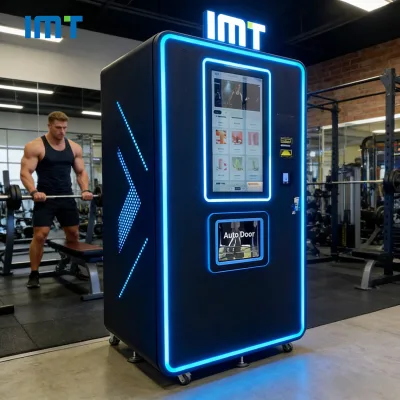
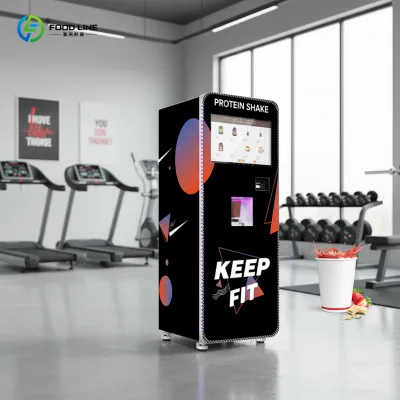
Comprehensive Sourcing Guide
Strategic Sourcing Guide for Protein Shake Powder Vending Machines
The global demand for automated nutrition solutions has driven a significant shift in how businesses procure protein shake powder vending machines. For B2B buyers, navigating the landscape of these specialized units requires a rigorous approach that balances technical specifications with operational reliability. The market offers a diverse array of models, ranging from compact indoor units to robust semi-outdoor installations capable of handling high-volume dispensing. This guide synthesizes available product data to provide a structured framework for evaluating potential suppliers and selecting equipment that aligns with specific operational needs.
Technical Architecture and Dispensing Capabilities
The core functionality of a protein shake vending machine relies on its ability to mix dry ingredients with liquids and dispense the final product with precision. Based on observed product attributes, the industry standard for these units involves a multi-canister system designed to hold specific volumes of protein powder. High-capacity models are observed to feature seven ingredient canisters, each with a 4-liter volume, allowing for a wide variety of flavor profiles and nutritional blends. Smaller configurations may utilize four canisters, typically supporting four hot and cold drink options simultaneously.
The dispensing mechanism is a critical differentiator. Advanced units are equipped with an auto-cup dispenser, often holding up to 70 pieces of 14oz cups, which streamlines the user experience by eliminating the need for manual cup retrieval. The mixing process is facilitated by a water supply system that can operate via a pump or direct tap water connection. Water capacity varies by model, with some units featuring a reservoir of 5 liters, a dedicated hot water tank of 1.8 liters, and an additional 2-liter compressor-driven system for temperature control.
Temperature regulation is essential for protein shakes, which are often served cold. Buyers must verify the cooling technology employed. The market offers two primary options: a compressor cooler capable of maintaining temperatures between 5 to 15 degrees, and an electronic cooler system that operates within a 15 to 20-degree range. The choice between these systems impacts energy consumption and the final product temperature consistency. Furthermore, the physical dimensions of the machine are vital for placement planning. Standardized dimensions observed in the sector include models measuring approximately 570mm in width, 590mm in depth, and 1800mm in height, while other configurations may differ significantly, such as units measuring 430mm by 580mm by 710mm.
Payment Systems and User Interaction
The user interface and payment infrastructure determine the accessibility and revenue potential of the vending machine. A critical observation in the current market is the divergence between payment methods. Some units are designed with a "Coins" payment system, often paired with a "Coin and Note" charge system, making them suitable for locations where digital payment infrastructure is limited. Conversely, other models support "Swiping Card" transactions and "Credit Card" systems, catering to modern, cashless environments.
The inclusion of a paper money acceptor is frequently listed as an optional feature, suggesting that buyers should verify if this hardware is included in the base price or requires an upgrade. Similarly, the presence of a touch screen is a variable attribute; while some models are specified as having a touch screen, others are explicitly listed as "Without Touch Screen," relying instead on physical buttons or a simpler interface. The ability to provide small change is another functional requirement that varies by model, with some units supporting change dispensing and others lacking this capability.
Buyers must also consider the environmental condition of the intended installation site. Units are categorized for either "Indoor" or "Semi-outdoor" use. This distinction is crucial for durability, as semi-outdoor models must withstand varying humidity and temperature fluctuations. The "Food and Drinks" classification confirms that these machines are built to meet basic hygiene standards for consumable products, but the specific environmental rating must match the deployment location to prevent premature hardware failure.
Compliance, Certification, and Safety Standards
When procuring industrial vending equipment, verifying compliance with safety and quality standards is paramount. While specific certification data for every unit in the current market scan is not universally available, the presence of CE certification is noted in background contexts as a relevant standard to verify. Buyers should explicitly request certification documentation from suppliers to ensure the electrical components and mechanical systems meet the safety requirements of their target market.
Safety features are integral to the design of these machines. Most observed models include "Power-off Protection" to prevent damage during electrical surges or unexpected outages. Additionally, "Failure Self Detection" systems are standard, allowing the machine to identify and report malfunctions automatically, which reduces downtime and maintenance costs. The "New" condition of the products indicates that buyers should expect brand-new units rather than refurbished stock, though the specific warranty terms should be negotiated separately.
The production origin is another factor in compliance. Many units are identified as originating from Hangzhou, China, a major manufacturing hub for vending technology. Buyers should verify that the manufacturing process adheres to international quality standards, particularly regarding food safety and electrical safety. The "Factory Producing" attribute suggests a direct manufacturing relationship, which can be advantageous for quality control but requires thorough vetting of the supplier's quality assurance protocols.
Cost Drivers and Procurement Economics
The pricing of protein shake powder vending machines is influenced by several key factors, including the complexity of the payment system, the cooling technology, and the customization options. The observed price range in the market spans from 350 to 6100 USD, a significant variance that reflects differences in features and build quality. Lower-priced units typically lack advanced cooling systems, touch screens, or card payment capabilities, while higher-priced models offer comprehensive feature sets including extended networking, custom colors, and advanced self-detection systems.
The Minimum Order Quantity (MOQ) is a critical economic factor. In the current market, the observed MOQ is consistently 1 unit, indicating that buyers can procure single units without being forced into bulk purchases. This flexibility is beneficial for pilot programs or small-scale deployments. However, buyers should be aware that customization options, such as "Customized Color" or specific branding, may incur additional costs or longer lead times, even if the base MOQ remains low.
Packaging is another cost consideration. Units are typically shipped using a combination of foam and carton, with some requiring a wood case for extra protection during international transit. The weight of the machines, observed to be around 150kg for larger models, impacts shipping logistics and costs. Buyers must factor in freight charges, which can be substantial given the weight and dimensions of these industrial units. The "Extended Networking" capability is a value-added feature that allows for remote monitoring and management, potentially reducing operational costs but increasing the initial purchase price.
Supplier Evaluation and Quality Assurance
Selecting the right supplier requires a rigorous evaluation process that goes beyond price comparisons. Buyers should prioritize suppliers who demonstrate transparency in their production capabilities. The "Factory Producing" attribute suggests that some suppliers are direct manufacturers, which can offer better pricing and more direct communication regarding technical specifications. However, buyers must verify the supplier's ability to support the specific customization needs, such as the "Customized" nature of the units or the "Optional" base cabinets.
Quality control should be a central part of the supplier selection criteria. Buyers should request detailed information on the testing procedures for the cooling systems, payment modules, and mixing mechanisms. The "Change" attribute, which refers to the ability to handle small change, should be tested in a live environment to ensure reliability. Additionally, the "Condition" of the product must be confirmed as "New" upon delivery, with clear documentation of the manufacturing date and batch number.
The supplier's ability to provide after-sales support is equally important. Features like "Failure Self Detection" are only useful if the supplier can provide timely technical support to resolve the identified issues. Buyers should inquire about the availability of spare parts, particularly for the canisters, water pumps, and payment acceptors. The "Optional" nature of certain components, such as the paper money acceptor or base cabinet, means that buyers must ensure these parts are available for future upgrades or replacements.
Operational Deployment and Long-Term Considerations
The successful deployment of a protein shake powder vending machine depends on aligning the unit's specifications with the operational environment. For indoor locations, units with "Indoor" environmental ratings are sufficient, while semi-outdoor locations require models designed to withstand exposure to the elements. The "Auto Cup" feature is a significant operational advantage, reducing the need for manual intervention and ensuring a consistent user experience.
Long-term procurement considerations include the scalability of the payment systems and the adaptability of the product offerings. The ability to support "Extended Networking" allows for centralized management of multiple units, which is essential for large-scale deployments. Buyers should also consider the flexibility of the ingredient canisters, which can be swapped to accommodate new flavors or nutritional blends without replacing the entire machine.
The "Vending Machine" classification implies a need for regular maintenance and restocking. The "7 Ingredient Canisters Each 4L Volume" configuration allows for a diverse menu, but buyers must ensure that the supply chain for these specific canisters is reliable. The "Water Supply" system, whether pump or tap-based, requires regular cleaning to prevent mineral buildup and ensure the quality of the protein shakes.
Conclusion
Sourcing a protein shake powder vending machine requires a balanced approach that considers technical specifications, payment flexibility, and supplier reliability. The market offers a wide range of options, from basic coin-operated units to advanced, networked systems with custom cooling and payment capabilities. By carefully evaluating the observed attributes—such as the number of canisters, cooling temperature ranges, and payment systems—buyers can select a unit that meets their specific operational needs. The variability in price, from 350 to 6100 USD, reflects the diversity of features available, and the low MOQ of 1 unit provides flexibility for various deployment scales. Ultimately, the success of the procurement depends on thorough due diligence, ensuring that the selected machine is not only technically capable but also supported by a reliable supplier committed to long-term performance.
FAQs
What cooling options are available for protein shake machines?
Two cooling systems are available: a compressor cooler maintaining 5 to 15 degrees or an electronic cooler operating between 15 and 20 degrees. Buyers must verify which system is included as both are listed as optional features for specific models.
How many ingredient canisters do these machines support?
High-capacity models feature seven ingredient canisters, each with a 4-liter volume, while smaller configurations may utilize four canisters. This capacity allows for diverse flavor profiles and supports dispensing four hot and cold drink options simultaneously.
Can these machines operate in semi-outdoor environments?
Yes, specific models are designed for semi-outdoor conditions, while others are rated strictly for indoor use. Selecting the correct environmental rating is crucial to ensure durability against humidity and temperature fluctuations at the deployment site.
What payment methods are supported by these vending units?
Payment systems vary by model, supporting coins, notes, credit cards, or card swiping. Some units include an optional paper money acceptor, while others rely solely on coin or card mechanisms without cash handling capabilities.
Which dimensions are standard for these protein shake machines?
Standard dimensions observed include models measuring 570mm in width, 590mm in depth, and 1800mm in height. Other configurations may differ significantly, such as units measuring 430mm by 580mm by 710mm depending on the specific model.
Are customization options available for these vending machines?
Customization is available for color and specific branding requirements on many units. Buyers should note that while customization is offered, it may affect the base price or require specific negotiation regarding lead times and minimum order quantities.